A gram of cocaine in Europe costs about what it did ten years ago, usually €60 to €80. The difference is that today’s gram contains a lot more cocaine. According to the EU Drugs Agency (EUDA), retail cocaine purity in 2024 was 44% higher than in 2014, while the price fell. An older report from the same agency put the rise at 40% over a decade, which is probably where the number you keep seeing comes from.
That one fact sits behind several stories that usually make the news separately. Crack is spreading in European cities. Narco-submarines now reach the Azores and Galicia. Every year customs and coast guards announce record seizures, and the street price doesn’t budge.
When I started on this piece, I was convinced that police and coast guards catch a fraction of a percent of what flows. It turns out they catch far more. For anyone who believes in this war, that is even worse news: even that much isn’t enough.
Where does “40% purer for the same price” come from?
The likely source is EU Drug Markets: Cocaine, a 2022 report by the EMCDDA (as the EUDA was then called) and Europol. The authors took 2010 as the baseline and tracked averages across EU countries. By 2020 the price index stood at 106 and the purity index at 140. The price barely moved, and purity rose by 40%. The report puts this down to more very pure cocaine at the wholesale level and to competition between trafficking networks (EUDA).
The same report has a number that says even more. Once purity and national price levels are taken into account, a gram of cocaine became on average 38% more affordable for the typical resident between 2015 and 2020.
Each annual EUDA report measures the same thing from a different base year, so the result shifts a little: 45% in the 2024 report, 34% in 2025, 44% in 2026. The latest edition says that although the retail price of cocaine has fallen over the past ten years, purity in 2024 was 44% higher than in the 2014 index year (EUDA, European Drug Report 2026). This is an index of national averages, not the result of a single study, but the trend is clear and consistent.

What does that look like in absolute terms? In 2024 average street purity ranged from 48% to 92% across EU countries, and from 64% to 75% in half of them. Drug-checking services reported that in 2025, 65% of samples were at least 80% pure, up from 50% a year earlier. In 2023 a gram usually cost €60 to €83, and a wholesale kilo €33,000 to €38,000 (EUDA).
From the EUDA indices it follows that a pure gram of cocaine got about a third cheaper between 2013 and 2023, and cheaper still after inflation. That is my own calculation, but the UN reaches the same conclusion (UNODC, World Drug Report 2026). A study published in BMJ Open found that between 1990 and 2010 the price of cocaine in Europe, adjusted for purity and inflation, fell by 51% (ScienceDaily).
The freshest field data comes from the Global Initiative Against Transnational Organized Crime. In 2025 a wholesale kilo cost €15,000–16,000 in Belgium and the Netherlands and €12,000–14,000 in Barcelona. Street prices sit at €45–65 a gram. For €50 you now get 0.6–0.7 g at 70–80% purity, whereas in 2021–2024 you got 0.9–1 g at 30–40% (GI-TOC, March 2026). There is less powder in the bag, but about 50% more actual cocaine.
Why is cocaine so cheap?
Because there has never been more of it. The UN estimates that about 4,100 tons of pure cocaine may have been produced worldwide in 2024, more than four times as much as in 2014. The year before had already set a record: 3,708 tons, 34% more than in 2022 (RNZ). Colombia alone had 261,000 hectares (about 645,000 acres) of coca in 2024 (InSight Crime).
The customers keep coming too. About 25 million people use cocaine worldwide, 38% more than ten years ago. In Europe the figure is 5.5 million, or 22% of all users (UNRIC). Western and Central Europe is the second-largest cocaine market after North America.
When there is plenty of product and street prices have settled at round numbers like €50 or €80, dealers don’t cut the price. They put more product in the bag for the same money. That is how I read it. The EUDA speaks more cautiously of competition between networks, but the effect is the same: the customer gets a purer product at the same price.
Is purer cocaine behind the spread of crack?
Partly, though the EUDA puts it differently. Crack is cocaine converted into a form that can be smoked. It hits faster and wears off sooner than snorted powder, which makes it more addictive. In David Nutt’s ranking of drug harms, which I go through in my post on LSD and its strange history, crack came out as one of the three most harmful substances for the user, alongside heroin and methamphetamine.
In its latest report, the EUDA writes that the spread of crack in Europe appears to be driven by the high availability of cocaine, the ease of converting powder locally and the differing dynamics of local retail markets (EUDA, 2026). The emphasis is on availability, not purity. Cheap, easy-to-get cocaine certainly doesn’t hurt. The agency also notes that monitoring is uneven, so it is hard to say how much of this is a real increase and how much is better counting.
The numbers aren’t huge, but they are growing:
- In 2024 about 11,400 people in the EU entered treatment for crack, up from 9,900 a year earlier. 85% of them were in five countries.
- The number of people seeking help for crack for the first time rose by 53% between 2018 and 2024, from 2,800 to 4,300.
- In the first half of 2025, drug consumption rooms in 12 cities reported crack smoking.
Where is it showing up? The 2022 report listed increases in Spain, France and Italy, as well as in Belgium, Ireland and Portugal. Crack also appeared in some German cities where it had barely existed before. The highest levels of crack residues in wastewater were found in Amsterdam and Antwerp (EUDA). The UN adds that among the poorest users, some are switching from heroin to crack (UNODC).
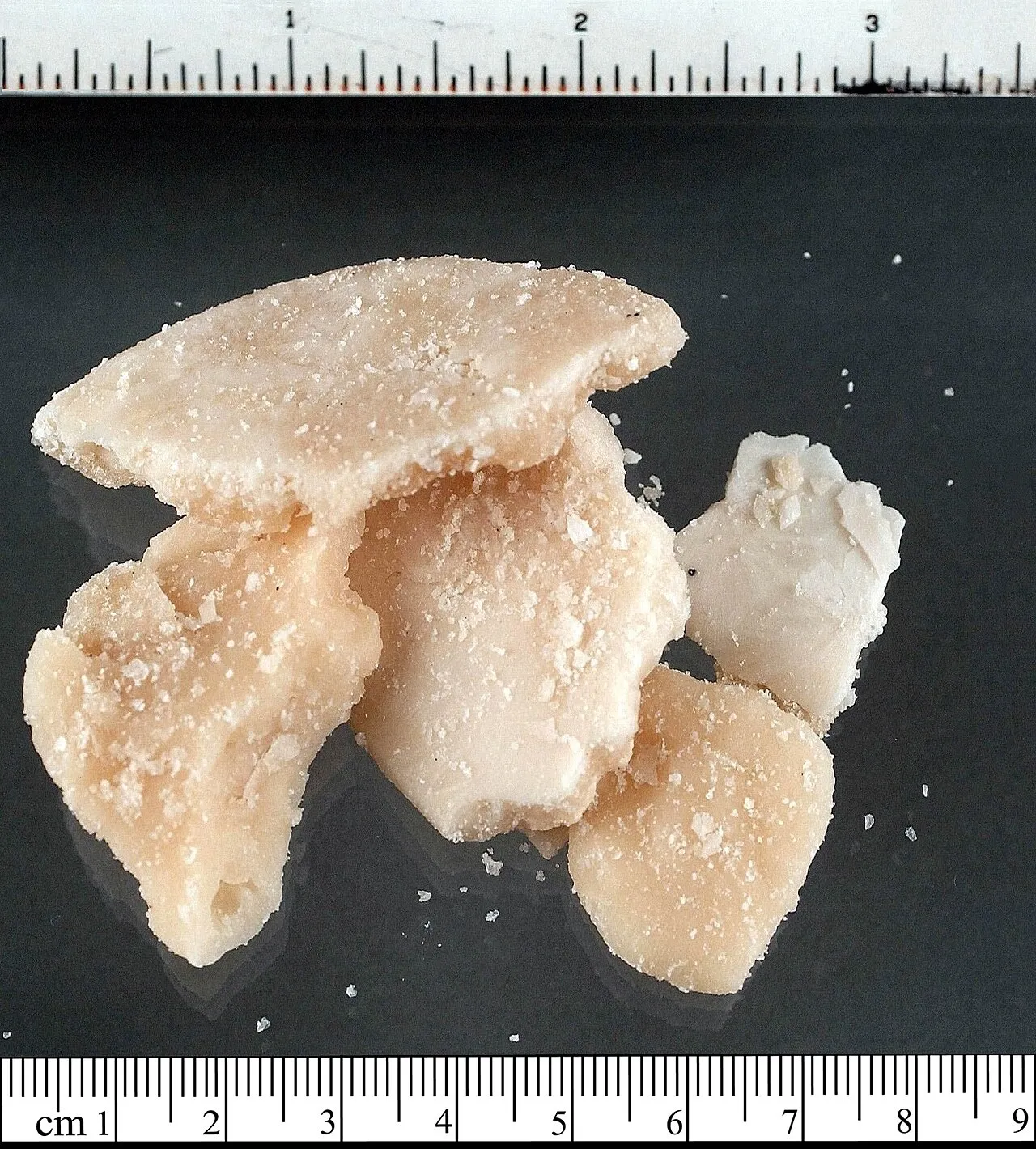
In Europe, crack is still mostly a problem at the margins: homeless people, people with many years of addiction behind them, people selling sex on the street. For comparison, about 37,000 people entered treatment for cocaine of any kind for the first time. But crack has one feature that should worry us. It is sold in small, cheap portions, so it is within reach of people who can’t afford a gram of powder.
Narco-submarines: how cocaine crosses the ocean
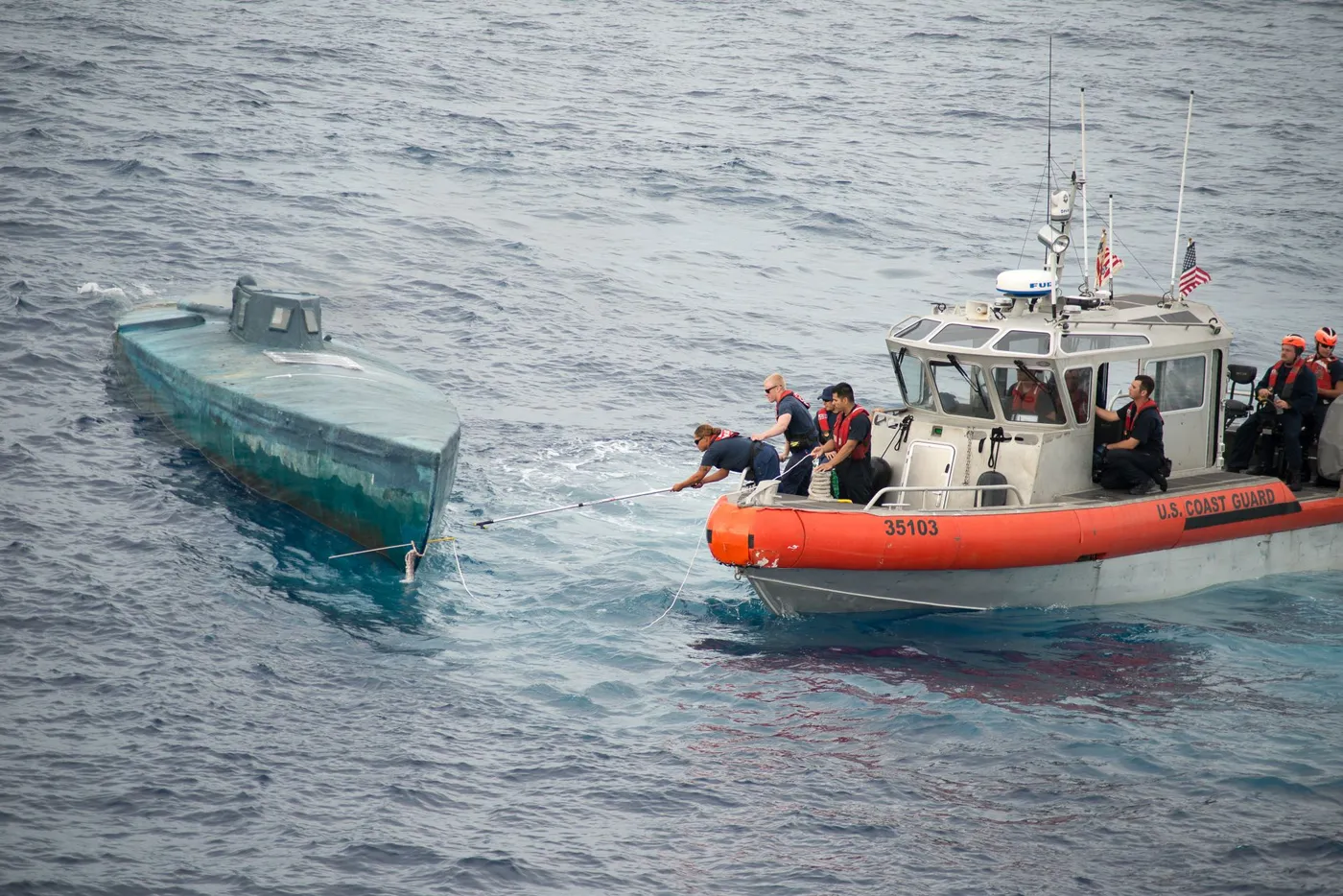
Between 1993 and 2023 the Colombian navy seized 228 semi-submersibles carrying drugs (UNODC). Most of them aren’t real submarines but long, flat hulls that travel just below the surface. Only the cockpit and the exhaust pipe stick out of the water. From a plane such a boat looks like a streak on the waves, and it barely shows up on radar.
The first fully submersible one was seized on July 2, 2010, in Ecuador, near the Colombian border. It was about 31 meters (100 feet) long and could carry roughly 10 tons. The US Drug Enforcement Administration called it the first fully operational submarine built by smugglers (The Register).
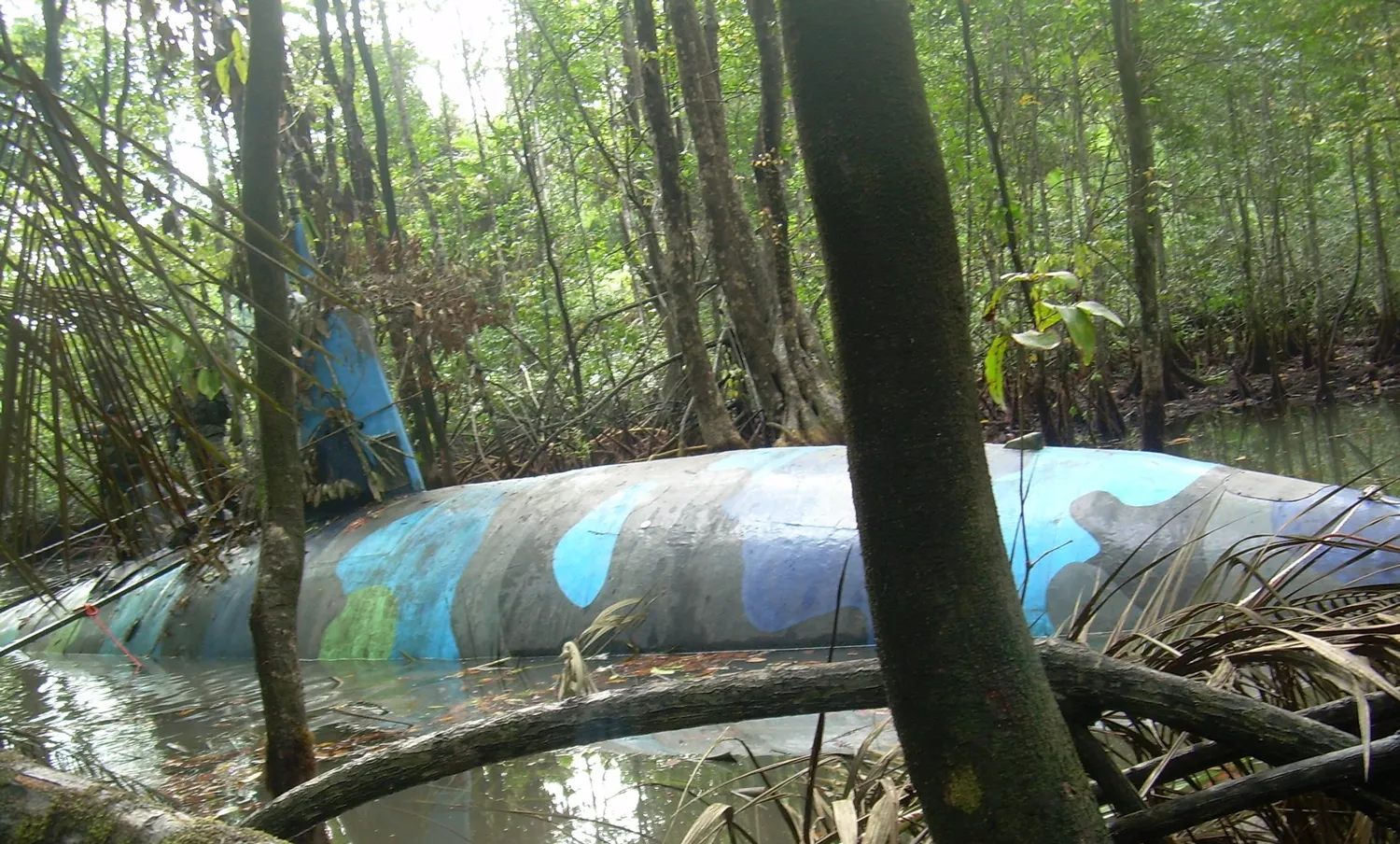
A semi-submersible costs from $150,000, but usually $1–2 million. A true submarine runs $2–4 million (InSight Crime). That sounds expensive until you count the cargo. Three tons of cocaine at 2023 European wholesale prices is worth about €100 million. The boat is disposable, and nobody mourns it.
In November 2019, in the Ría de Aldán inlet in Galicia, Spanish authorities found the first narco-sub known to have crossed the Atlantic. On board were 152 bales, about 3 tons of cocaine (Agencia Tributaria). Since then these boats have stopped being exotic. Between 2023 and 2025 at least six were detected off the Iberian Peninsula and the Portuguese islands. In March 2025 the Portuguese stopped one carrying 6.5 tons about 500 nautical miles south of the Azores (MAOC-N), and in January 2026 one carrying almost 9 tons, a Portuguese record (Euronews).

The smugglers are also looking for new routes. In November 2024 the Colombian navy intercepted a semi-submersible about 2,000 km (1,250 miles) southwest of Clipperton Island, on a route to Australia (Euronews). That’s the same Clipperton I wrote about in my post on the forgotten island and its settlers. Empty narco-subs have also washed up in the Solomon Islands, the first in 2024 and more in 2025 (RNZ).
The next step is boats with no crew at all. In July 2025 Colombia seized an unmanned semi-submersible with a Starlink antenna that could carry 1.5 tons. It was empty, probably on a test run (CBS News).
How much cocaine actually gets seized?
Far more than a fraction of a percent, but it depends on what you count. In 2023 authorities worldwide seized a record 2,275 tons of cocaine, against estimated production of 3,708 tons. That looks like 61%, but the two numbers can’t be compared directly. The UN measures production in pure cocaine and seizures in product of varying purity. A large share is seized in Colombia itself, which took 740 tons in 2023 (UNODC/SIMCI, in Spanish). Even after a heavy discount, though, you end up with tens of percent, not fractions of one.
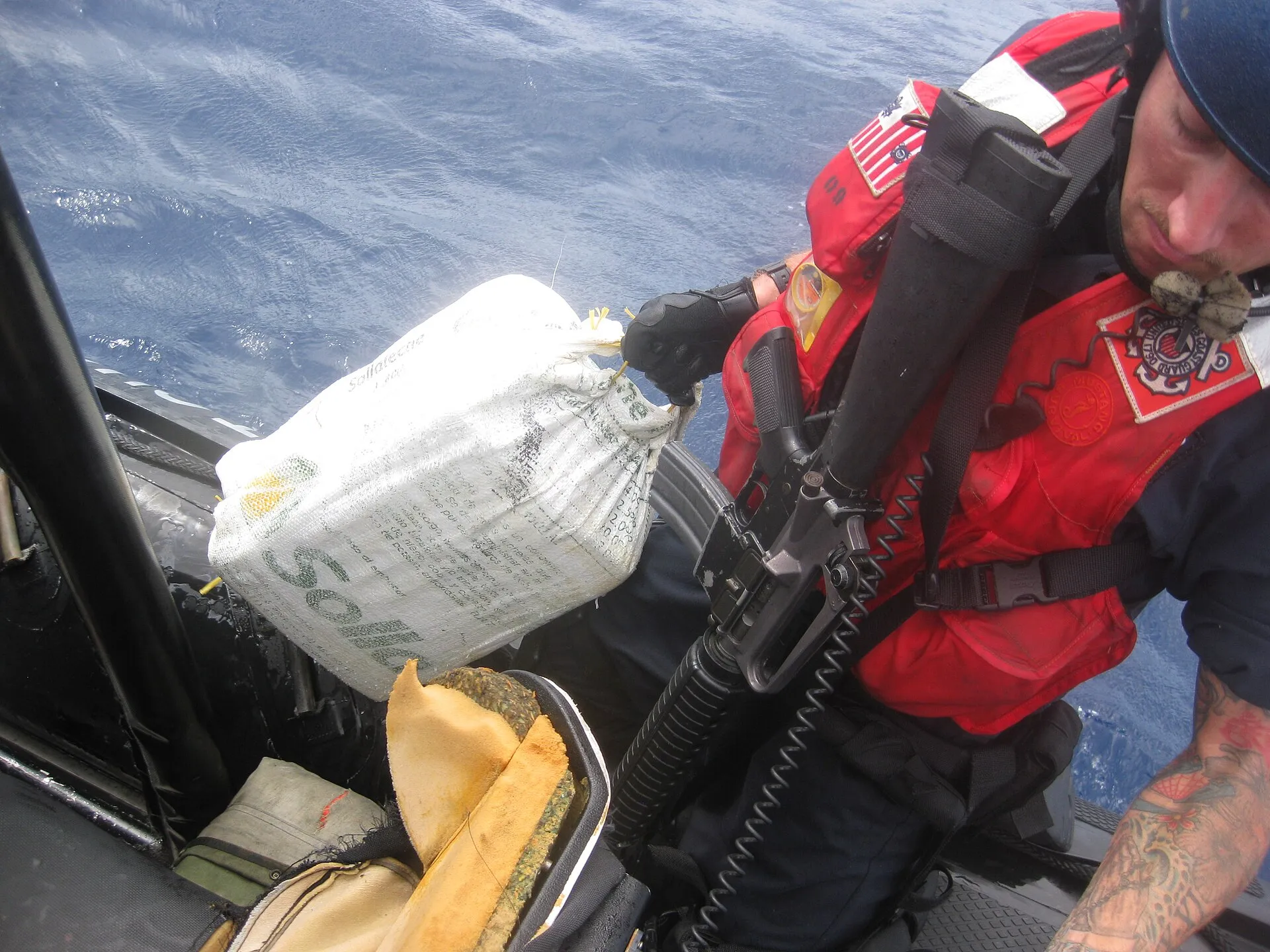
At sea the share is much lower. In 2023 the US Coast Guard seized 96 tons out of a flow of 2,593 tons that intelligence knew about. That’s 3.7%, and the target had already been lowered from 10% to 7.5% (DHS OIG). In 2019 the commander of US Southern Command told Congress that about 6% of known shipments were being intercepted (hearing transcript). And the “known flow” is only the part intelligence noticed in the first place. For smuggling on the open sea, US officials give effectiveness estimates as low as 5%.
Ports aren’t much better. According to Europol, about 2% of all containers are physically inspected, and about 10% of those from South America (Europol, 2023). Belgian customs officials admit that by some estimates about 10% of the drugs coming into Antwerp are detected.
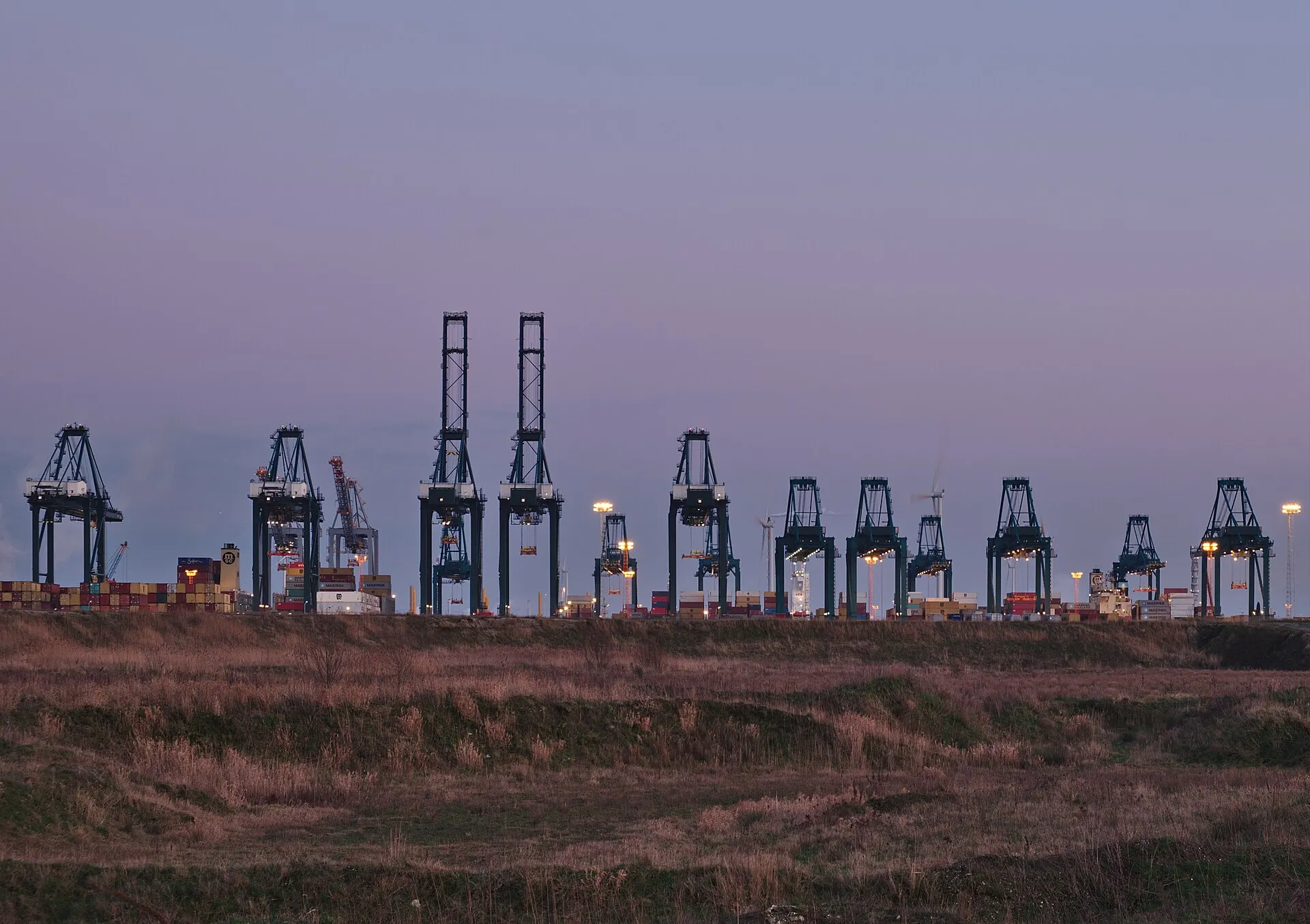
Antwerp shows it best. About 120 tons of cocaine were seized there in 2023, 44 tons in 2024 and about 55 tons in 2025 (VRT). Rotterdam went from 25.9 to 11.5 tons. The Dutch Public Prosecution Service was quick to add that this does not mean less trafficking (OM, in Dutch). The smugglers simply moved on to Spain, France and Portugal. In 2024 Spain led EU seizures with 124 tons, and France broke its own record.
Why don’t seizures push prices up?
Because at the source, cocaine costs almost nothing. A kilo leaving a lab in Colombia is worth about $1,400, and just under $6,000 on average at export (Anadolu). On a European street the same kilo, converted to pure cocaine, is worth about €100,000. The lab price is 1–2% of the retail price. Most of the money is made on the risk of smuggling and on the last links of the chain, not on the product.
Economists worked this out long ago. Jonathan Caulkins and Peter Reuter calculated that replacing seized cocaine costs just 1% of the retail price in the producing country, and at most 20% once it has reached the destination country. Earlier simulations suggested that even doubling the import price raises the street price by only 10–20% (Caulkins and Reuter, 2010). A 2014 review in Addiction found no convincing evidence that a higher risk of seizure raises prices, and especially not retail prices (IDPC).
The Colombian economists Daniel Mejía and Pascual Restrepo calculated what it cost to remove one kilogram of cocaine from the US market between 2000 and 2008. Through crop eradication: about $940,000. Through seizures: about $175,000 (JEBO, 2016).
The latest evidence comes from an experiment no ethics committee would ever have approved. Since September 2025 the US military has been striking boats suspected of smuggling in the Caribbean and the Pacific. By July 2026 more than 220 people had been killed in these strikes, and according to a DEA analysis reported by The Washington Post, the price and availability of cocaine in the US had not changed in any noticeable way. Prices rose for about two months, then went back to where they had been (NPR, ADN/Washington Post). Earlier, the head of the DEA had talked about wholesale prices rising by 30–45%.
Does fighting cocaine smuggling make any sense?
As a way to raise prices and cut the number of users in a mature market, I think not, and the evidence here is strong. But “no sense at all” would be an exaggeration. Supporters of interdiction have several arguments that deserve a fair hearing:
- The UN argues that seizures grew faster than production and held back the growth in supply (UNODC, 2023).
- Seizures produce intelligence on criminal networks, and without it you can’t take them apart.
- Enforcement works best where a market is only just forming, and it can stop that market from taking off.
- A port without inspections quickly becomes a corrupt port. An official takes a bribe more easily when nobody checks anything.
There are side effects too. A study in the Review of Economics and Statistics found that large seizures in Colombia caused shortages that accounted for 10–14% of the rise in violence in Mexico between 2006 and 2009 (Castillo, Mejía and Restrepo, 2020). When product runs short, cartels fight over what’s left.
Vanda Felbab-Brown of the Brookings Institution suggests we stop measuring success in tons and prices and start by asking whether the most violent groups have been weakened. I find that convincing. Instead of boasting about a seizure record that will be broken again next year, governments would do better to spend some of that money on treatment, harm reduction and drug checking. With cocaine at 80% purity and above it is easy to take too much, and crack is taking its toll among people no coast guard boat will ever reach.
My take
Record seizures are like a record number of speeding tickets. They show the size of the problem, not that it has been solved. Cocaine in Europe has never been this pure, this cheap or this easy to get, and every year the ports put fresh tons of white powder on display in front of flags and proud uniforms.
I was wrong about the fraction of a percent. Law enforcement catches a lot, globally perhaps more than anyone would have guessed. But with a product that costs next to nothing at the source, the cartels book these losses as a cost of doing business, like a tax. A $2 million boat carrying cargo worth about €100 million wholesale can sink, get seized or wash up in the Solomon Islands, and the business still pays.
I think cocaine is now the best proof that you can’t beat demand by squeezing supply. If anything is going to reduce the number of people smoking crack at the train station in Brussels or Lisbon, it will be treatment and help on the ground rather than another frigate in the Atlantic. I describe a similar pattern in the methamphetamine market in my post on Pervitin and the return of methamphetamine to Europe.
Sources
- EUDA, European Drug Report 2026: cocaine and key developments; EMCDDA and Europol, EU Drug Markets: Cocaine, retail markets (2022); the cocaine market in Europe, 2013–2023.
- UNODC, World Drug Report 2026, highlights; Global Report on Cocaine 2023.
- Global Initiative Against Transnational Organized Crime, European Drug Trends Monitor, issue 4 (March 2026).
- InSight Crime, analysis of narco-sub seizures; Europol, criminal networks in EU ports (2023); DHS Office of Inspector General report on the Coast Guard (2025).
- J. Caulkins, P. Reuter, How Drug Enforcement Affects Drug Prices, Crime and Justice (2010); H. Pollack, P. Reuter, Addiction (2014); D. Mejía, P. Restrepo, Journal of Economic Behavior & Organization (2016); J. C. Castillo, D. Mejía, P. Restrepo, Scarcity without Leviathan, Review of Economics and Statistics (2020).
- Photos from Wikimedia Commons: semi-submersible interdiction and cocaine bale (US Coast Guard, public domain), the Ecuador submarine and crack (DEA, public domain), the Aldán narco-sub (Estevoaei, CC BY-SA 4.0), coca leaves (Crista Castellanos, CC BY-SA 4.0), Port of Antwerp (Trougnouf, CC BY 4.0).


Questions people ask
How pure is cocaine in Europe?
In 2024 the average retail purity of cocaine ranged from 48% to 92% across EU countries, and from 64% to 75% in half of them. According to the EUDA, purity was 44% higher than in 2014.
How much does a gram of cocaine cost in Europe?
According to EUDA data for 2023, a gram typically cost €60 to €83, and as little as €34 in some countries. Adjusted for purity, cocaine has become cheaper over the past decade, not more expensive.
What is a narco-submarine?
A boat built to smuggle cocaine. Most are semi-submersibles that travel just below the surface, which makes them hard to spot from the air or on radar. They carry up to 10 tons and cost from a few hundred thousand to a few million dollars.
What percentage of cocaine is seized?
Nobody knows exactly. In 2023 authorities worldwide seized 2,275 tons of cocaine against estimated production of 3,708 tons, but the two figures are not directly comparable. At sea the share is far lower: the US Coast Guard seized 3.7% of the flow it knew about in 2023.