Type XLG into a search box and, at least in my case, you get sneakers: the Adidas Superstar XLG and Samba XLG, chunkier versions of two of its classics. Investors know XLG as the ticker of an exchange-traded fund that holds the 50 largest companies in the S&P 500 (Yahoo Finance). Wikipedia knows it as the code for ancient Ligurian, a language that died in antiquity, and for an airfield in France (Wikipedia). Since 2023, the customer experience trade has wanted it to mean experience-led growth.
Do we need it? No. Experience-led growth is good advice: keep the customers you have by treating them well, and judge the result by what they do, not by what they tell a survey. But the advice is older than most of the people now putting it on slides, and an acronym does nothing for it except make it sellable again.
I think XLG is less a strategy than a product category: a new label that consultancies and software vendors can sell to the same buyers who already bought customer experience, customer centricity and the Net Promoter Score.
What is experience-led growth?
The term comes from McKinsey. In “Experience-led growth: A new way to create value”, published in March 2023, four of its partners describe a strategy for large incumbents such as airlines, insurers and telecoms: instead of chasing new customers, grow by giving existing ones an experience good enough that they stay, buy more and spend a larger share of their money with you. “We call this strategy ‘experience-led growth,’” they write (McKinsey).
The recipe has three pillars: a growth aspiration linked to value, a transformation of customer journeys, products and business models, and the capabilities to support it, from new mindsets to “effective CX measurement”. The order matters, and it is the article’s best idea: start with the financial outcome you want, then pick the improvements that should deliver it, and measure success in behavior, such as share of wallet, repeat purchases and net revenue retention. I agree with every word of that.
Then the vendors arrived. Zoho, the business software company, has a page on “the experience-led growth paradigm” with a ten-point “XLG manifesto” that ends with “Prioritize trust, emotions, experience, and outcomes over everything else” (Zoho). A feedback analytics company publishes “The essential guide to Experience-Led Growth (XLG)” (Chattermill). Once a term has a manifesto and a guide, it has stopped being an idea and become a market.
Where have we heard this before?
In 1990, Frederick Reichheld and W. Earl Sasser told readers of the Harvard Business Review that service companies should aim for “zero defections”, because long-term customers are the profitable ones. Bain still summarizes the article with the claim that companies can boost profits by almost 100% by retaining just 5% more of their customers (Bain). That is experience-led growth, 33 years before the name.
In 1998, Joseph Pine and James Gilmore published “Welcome to the Experience Economy”, arguing that experiences are a distinct economic offering, the next step after goods and services (Harvard Business Review). In 2003, Reichheld came back with “The One Number You Need to Grow” and the Net Promoter Score, which promised that a single customer question would predict a company’s growth. As I wrote in Is NPS dead?, the research since then found it predicts growth about as well as other customer metrics, and no better.
The “-led growth” format came later. Blake Bartlett of the venture firm OpenView coined “product-led growth” in 2016 for software that sells itself through use (OpenView). It described something real: products that people adopt before anyone signs a contract.
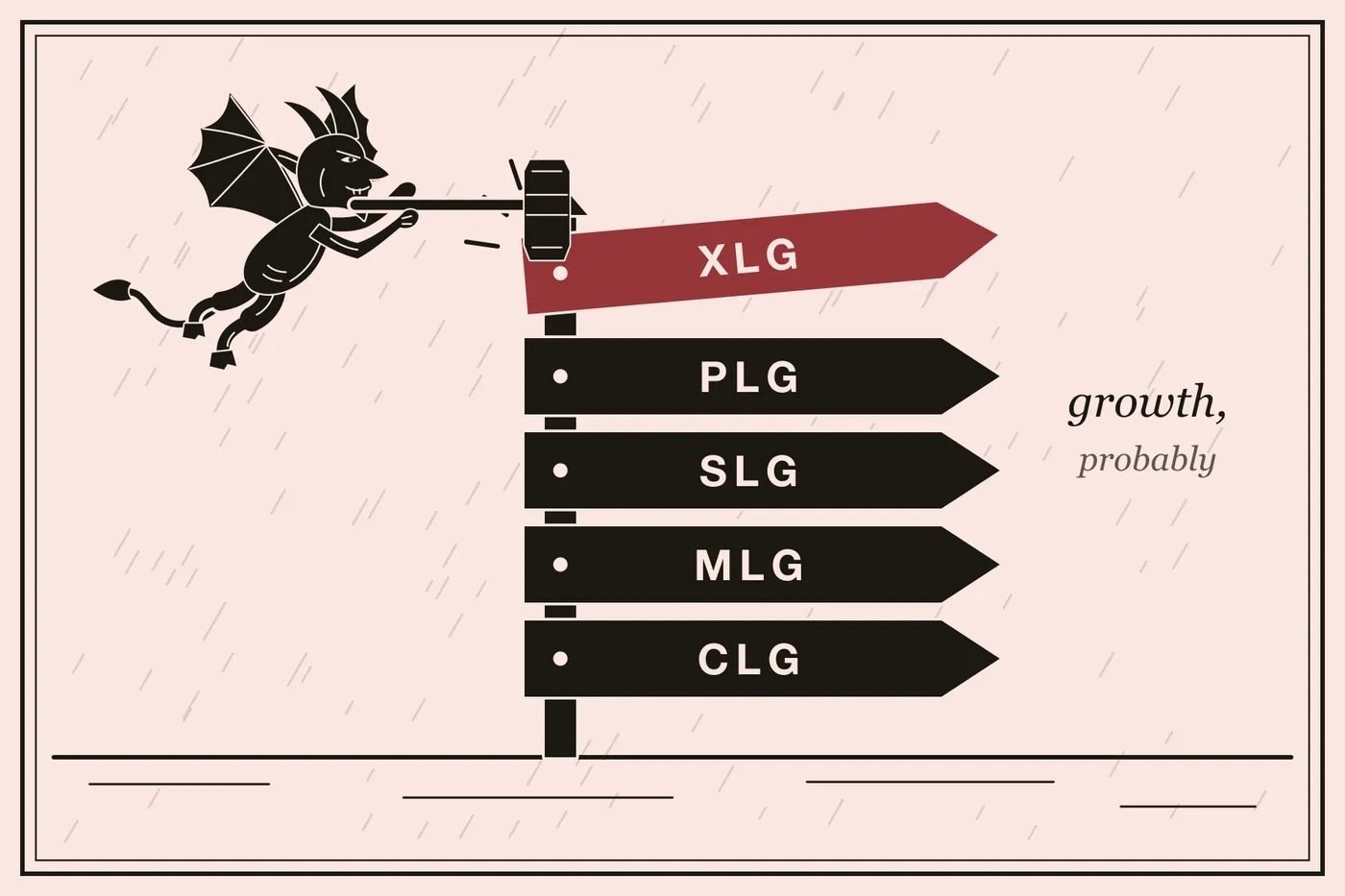
Since then the suffix has been attached to almost every department that wants a budget. XLG is the latest arrow on a crowded signpost, and every arrow points the same way.
Does customer experience really drive growth?
To give the idea its fair hearing: there is real evidence that satisfied customers are good for business. A 2006 study using the American Customer Satisfaction Index found that customer satisfaction was related to companies’ market value, and that a portfolio of the firms with the most satisfied customers beat the stock market (Fornell et al., 2006). That is a serious result from serious people.
It also got serious pushback. Robert Jacobson and Natalie Mizik re-examined the data and found that the excess returns came from a small group of computer and internet companies, not from satisfaction leaders across the economy (Jacobson and Mizik, 2009). The original authors replied that the returns hold up, and the argument went several rounds. The honest summary is that the link between experience and money exists, and it is smaller, slower and messier than a keynote slide makes it look.
McKinsey’s own numbers need the same care. Its headline is that US companies leading on customer experience achieved more than double the revenue growth of the laggards between 2016 and 2021, and the article itself calls this a correlation. Growing companies can afford better service, and customers of a company on a roll tend to be happier. That runs the arrow the other way.
The article also contains a sentence I’d frame. Successful experience-led growth strategies, defined as those that “increase customer satisfaction by at least 20 percent”, can, among other benefits, “improve customer satisfaction and engagement by 20 to 30 percent”. The same sentence lists higher cross-sell rates twice.
And its four case studies come from “a mobile telecom operator”, “a major logistics company”, a “global B2B power-tools company” and “a major regional healthcare provider”. Client confidentiality is a fair reason not to name them. It also means none of them can be checked.
Why does business keep renaming the same idea?
My view is that a new name solves problems for everyone except the customer. A consultancy gets a fresh practice to sell. A software vendor gets a new category to lead, a summit and a guide.
An executive gets a program with no track record, so it can’t have failed yet. The old program, the one with the same goals and a disappointing dashboard, quietly retires.
Market research has a stake in this, because every one of these programs runs on measurement. McKinsey’s third pillar asks for “effective CX measurement”, and in most companies that means more surveys. I showed in Big brands, miserable surveys what those surveys tend to look like to the person answering: unlabeled scales, tiny buttons, the vendor’s domain in the address bar. The instrument meant to measure the customer experience is often the worst experience the company offers.
And once the experience score is tied to a bonus, Goodhart’s law does the rest. The score goes up. Whether the experience does is another question.
What to do instead of adopting XLG
- Keep the best part of McKinsey’s article. Decide which customer behavior you want to change (retention, repeat purchases, share of wallet) and measure that, not a satisfaction score.
- Listen before you transform. In McKinsey’s telecom story, the turnaround began when the CEO listened to customers’ calls to the call center. That costs nothing and needs no framework.
- Fix the three things customers complain about most. Then the next three. Most companies already know what they are.
- Don’t create a new department or title. Give each pain point to the team that can fix it, with a date.
- Treat survey scores as smoke detectors, not targets. A falling score is a reason to look; a rising one is not a reason to stop.
My take
There is nothing wrong with experience-led growth except the name and what the name is for. Treating customers well so they stay and spend more is the oldest strategy in commerce; it was in the Harvard Business Review in 1990 and in every corner shop long before that. Wrapping it in a three-letter acronym doesn’t make it more likely to happen. It makes it easier to buy, and buying it is not the same as doing it.
The search results get it right, as it happens. Type XLG and you get a classic, made chunkier and sold again. That is a fair description of experience-led growth. I’d keep wearing the old pair and spend the money on fixing the things customers keep calling about.
Questions people ask
What is experience-led growth (XLG)?
McKinsey’s name, from a March 2023 article, for growing revenue from existing customers by giving them a better experience, so they stay longer, buy again and spend more. It starts from a financial goal and measures success in behavior: retention, repeat purchases and share of wallet.
Who came up with experience-led growth?
The term was put into circulation by McKinsey in ‘Experience-led growth: A new way to create value’ (2023), which says ‘we call this strategy experience-led growth’. Software vendors adopted it, along with the acronym XLG. The idea behind it is much older.
Is experience-led growth different from customer experience management?
Mostly in emphasis. Experience-led growth starts with a revenue target and works back to the customer experience improvements that should deliver it, while customer experience programs often start with the experience and hope the revenue follows. The practices underneath are the same.